
Commodity supply shocks: What markets may be overlooking in 2026
30 Apr 26
An interview with Tribeca’s Todd Warren on copper, supply chains and global commodity markets
Markets have been focused on demand – especially China.
But another force is gaining attention: global supply constraints.
From copper and fertiliser to critical minerals used in defence, supply-side pressures are becoming more visible across commodity markets.
This interview discusses how these dynamics are evolving and what they could mean for markets more broadly.
Watch the full interview
Or scroll down for a quick summary
Commodity markets are increasingly driven by supply dynamics
Copper supply is constrained by long development timelines
Geopolitics may disrupt critical inputs like sulphur
Fertiliser supply chains are globally interconnected
Demand for strategic minerals is gaining attention
Iron ore has shown relative resilience
Mining consolidation may continue
Why supply is coming into focus
Commodity markets have historically been driven by demand – especially from China.
But there is growing focus on supply, and how long it takes to bring new production online.
In commodities like copper, development timelines can extend well beyond a decade from discovery to production.
That means supply may not respond quickly to changes in market conditions.
At the same time, a period of reduced investment in exploration and development has contributed to tighter supply conditions.
“If you find a copper deposit today, it could take more than a decade before it reaches production” – Todd Warren, Tribeca Investment Partners
The role of global supply chains
Some supply risks are not always immediately visible.
But they can have broader implications.
Sulphur, for example, is a key input in both copper processing and fertiliser production.
A significant portion of global supply moves through the Strait of Hormuz, making it sensitive to geopolitical developments.
This highlights how disruptions in one part of the supply chain can flow through to multiple industries – including resources and agriculture.
Increasing focus on strategic commodities
As geopolitical tensions evolve, there is increasing attention on materials considered important for national security and advanced technologies.
These include:
Rare earth elements
Tungsten
Gallium and germanium
Supply of some of these materials is concentrated in a small number of countries.
This has contributed to broader discussions around supply security and diversification.
Iron ore and shifting demand dynamics
Iron ore markets have been influenced by changes in China’s property sector.
However, the picture is more complex.
China remains central to global steel production and trade.
Ongoing exports of steel and stockpiling activity suggest iron ore remains an important input.
This may help explain the relative resilience observed in prices.
Mining sector activity and supply considerations
With supply constraints becoming more widely discussed, resource companies are considering how to maintain or grow production.
Developing new projects can involve long timeframes.
As a result, some companies are exploring alternative approaches such as acquisitions.
This has contributed to ongoing consolidation activity within parts of the resources sector.
“If you want to grow production quickly, the fastest way is to buy it” – Todd Warren, Tribeca Investment Partners
What this means for markets
The increasing focus on supply-side dynamics is contributing to a shift in how commodity markets are being assessed.
Some potential implications include:
Supply constraints may influence commodity price behaviour over time
Geopolitical developments may contribute to market volatility
Greater focus on critical minerals may shape longer-term trends
Consolidation activity in the resources sector may continue
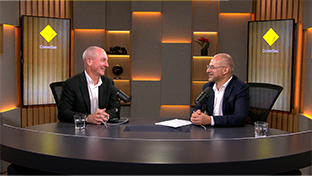
[MUSIC PLAYING] STEVEN DAGHLIAN: I'm joined today by Todd Warren, who is a portfolio manager at Tribeca Investment Partners with a very keen focus on all things resources. He's also currently the investment manager of ASX-listed Tribeca Global Natural Resources, or TGF. So thanks very much for joining me--
TODD WARREN: Thanks for having me.
STEVEN DAGHLIAN: --Todd, and welcome.
TODD WARREN: Thank you.
STEVEN DAGHLIAN: So I think let's start with perhaps an obvious one with the US-Iran conflict. I mean, since the war started in late February, a lot has obviously happened in markets. We've had energy stocks on the ASX lifting roughly 15%. The materials heading in the complete other direction. So when there are more questions than answers, higher inflation, rising interest rates, conflicting headlines. I mean, how do you remain disciplined as a professional level-headed when you make decisions?
TODD WARREN: Oh, look, I mean, if we responded to every news headline or tweet or truth, as the case may be, it would be constantly double guessing ourselves. So I guess being a fundamental investor, it helps to stick to your knitting, obviously. We're not day traders. And indeed, these dislocations as they are, it creates an opportunity. And that's where you need to be fall back on your specialist knowledge and your fundamental valuations and stick to that. Yes, the day-to-day volatility will luff one way or the other. As I say, use it as an opportunity rather than a trading cue necessarily.
STEVEN DAGHLIAN: So I'm curious in times like these then we know that markets can be more irrational and panicked in how they react to things. So for the investor at home, I think when we're not prepared for these type of moments, they can pass you by pretty quickly. So I mean, do you spend much time working out or working on different scenarios like what might happen, worst case or best case, over the next three to six months?
TODD WARREN: Yeah, absolutely. And indeed longer than that. So obviously, when we build our portfolios, we construct them from a commodity view. So looking at all the individual commodities out there, building our supply demand models, and your bull buys and bear case for those. And then combining that with your bottom-up stock-specific analysis and with those commodity analysis pieces, they're the pieces that obviously can flex within those different scenarios over different time frames, but also the operational updates that are occurring as well, and understanding whether the companies are shifting their plans according to obviously what's going on with from the macro perspective.
STEVEN DAGHLIAN: So let's look at commodity supply and demand. Focus is often on demand. But do you think we're taking seriously enough in markets the supply disruptions that we're seeing globally at this stage?
TODD WARREN: Absolutely not is a short answer. I think, look, the market in our view, somewhat myopically focuses on demand. And that's what's talked about. We hear about it in the news, in our space and resources. Demand piece has always been driven by China. It certainly has been for a couple of decades now really. But what we think is really driving commodities now and will continue to do so is the massive supply challenges that we face. And that's, ironically, is where we spend most of our time talking to those companies that produce the commodities.
And we think that the challenges on the supply side may overwhelm the demand questions that we might face. And current circumstances are a case in point where the supply of copper, as an example, is going to be just as much, if not more challenged by what's going on in the Middle East rather than the demand side of the equation. And that's just not well-understood. And it's not easily fixed.
STEVEN DAGHLIAN: Yeah, so even if we get an earlier than expected, I guess, agreement being reached between the US and Iran and things calm down. Do you think that could still be an issue, I guess, longer term as well?
TODD WARREN: 100%. This was an issue before things kicked off in the Middle East. To give you a few statistics. I mean, the average time frame from first successful drill hole for a copper mine to first production is now almost 16 years. So doesn't matter if you find something today, you're not going to have it out of the ground for a very long time to come. Now, there's a number of reasons for that. But one of those is that we haven't had a lot of exploration success as an industry for the last 5 to 10 years. So it takes time to rebuild that hopper.
We've been telling the companies, the management of these companies, not to invest in the ground, pays a dividend, buy back your stock, pay down your debt. Just whatever you do, don't put your money in the ground. And that's got long-term consequences. So we've got the situation where even in an environment where demand might recover or situations normalise, suppliers can't respond quickly.
STEVEN DAGHLIAN: So let's talk about a bunch of commodities. I mean, oil and LNG I think are obvious ones because we've got a relationship, I guess, with fuel and the like as well. But what other commodities are being disrupted at the moment that are maybe going unnoticed? You mentioned copper there.
TODD WARREN: Yeah, well, yeah, copper is a key one. So what's not or hasn't been talked about very much at all. We've been watching this undercurrent develop. More than 50% of the world's sulphur traverses the Strait of Hormuz. Why is that important? Well, you need sulphur to generate sulfuric acid, and sulfuric acid is a key input for 30% of the world's copper. So if you can't get sulfuric acid, you can't produce copper.
Now, we've already got a tight market for copper, if you start influencing 30% of the world's supply, we've got a big issue. The other one is urea. So sulphur also goes into urea, to fertiliser. Crops have time constraints on when you can apply that fertiliser. So there are significant knock-on effects of that. Now we're starting to talk about it now particularly in Australia obviously with our big agricultural focus. But it's happening in North America as well. So the planting season for their crops for their summer is now.
In Australia our winter wheat crops are reliant on fertiliser being applied now. So it's fine now. We've got fertiliser today. But if this issue goes on for longer, it's going to be a big issue.
STEVEN DAGHLIAN: So with the focus on defence spending as well where other governments have been spending more and committing more, I guess, and that's probably going to be the case for a while. I mean, how about some of those specialty commodities, the esoteric commodities that we don't hear about very often?
TODD WARREN: Yeah, look, yeah, I was asked a question not that long ago. What are the certainties that come of this conflict? Aside from they've been very few certainties in markets. I think one of them that you can with a degree of confidence say is that we're going to see more defence spend. If the country with the world's biggest defence budget is apparently short of armaments being the US, you can be sure that just about everybody else is short as well. Setting aside, obviously, the uncertainty this is creating from a geopolitical standpoint, there's going to be more money spent on defence.
Now within defence it's not just steel and those traditional inputs for defence spend these days. I mean, it's tungsten that goes into hardening of steel. It's rare earths that go into your smart weapons. It's gallium and germanium-- these very esoteric commodities, which are very short in supply, but particularly the Chinese have dominated the supply of these commodities for a long time now. And indeed for some of these commodities-- the US, for example, sources 100% of its gallium from China.
Now, if you're the US, that's clearly an untenable situation. Regardless of how they might be in a friendly environment where they're getting along well with the Chinese, but they don't want to be beholden to one supplier. Look, cast your mind back to the Russian invasion of Ukraine four years ago now. Hard to believe. That obviously put a very big, bright spotlight on the Europeans reliance on Russia for gas. And it spiked the gas prices as a consequence.
So what we will see with some of these more esoteric commodities is a massive tightening of supply because China have stolen a march on the rest of the world. They control the supply of some of these commodities, so they recognise the long-term strategic value. And it's only now that governments elsewhere in the world are starting to cotton on to that same thematic.
STEVEN DAGHLIAN: Yeah, so this whole government's already thinking of this-- the strategic value of commodities. And this has probably just made things worse and accelerated that.
TODD WARREN: Absolutely. It's just shown a really bright spotlight on these massive challenges. And coming back to that supply challenge, it's not easily fixed either.
STEVEN DAGHLIAN: Yeah, and then talking about China iron ore, I mean, what do you make of iron ore? Because obviously, China buys 70%, 75% of seaborne supply. So what type of impact? I mean, what are your forecasts, I guess, for that?
TODD WARREN: Yeah, so China-- yes-- the world's biggest consumer of seaborne iron ore. And that's not likely to change anytime soon. They source that iron ore aside from the domestic obviously from Australia and Brazil primarily. And the market has been incredibly bearish on iron ore now for probably a couple of years. Frankly, because of that think about what's happened in the Chinese economy. We went through China, urbanisation of the 2000s and the property market went through the roof. That drove steel demand, which drove iron ore demand and so on.
1 o'clock forward to today, and you've got the Chinese property market, which is clearly still in a very troubled state. And again, not likely to be corrected in the near term. And that's what's driven the bearish view of iron ore because Chinese steel is at a maximum and likely to decline in terms of supply. Therefore, so should the demand for iron ore. What's become more and more clear is that the Chinese are now exporting a lot of their steel. They're exporting-- about 15% of the steel they produce is now exported to the world, particularly Asia.
The only reason they can export it is because there's demand for it. So there's a buyer for that product. So going forward and I think, again, coming back to that strategic angle, there's a reason the Chinese continue to stockpile iron ore because they still see the need for steel and indeed that regional need for steel.
India is obviously the next big population base that could see a rise in demand for steel. And they've been historically self-reliant so domestically reliant on iron ore. But once they grow, as did China, once upon a time, they grow beyond their ability to domestically supply. They'll be reliant on the seaborne market.
STEVEN DAGHLIAN: And under the circumstances, iron ore prices have been pretty resilient, having probably a bit stronger than what many had anticipated not long ago. So in this climate, I mean, our market is-- the Aussie market is not too far away, I guess, from record highs. The US is basically has been there for the last month or so. Do you think M&A activity could lift from here or drop back?
TODD WARREN: Look, yes we do very much so. I mean, you look at-- the BHP and the Rio Tinto's the big end of town for us. They're still generating a huge amount of cash obviously from their legacy iron ore businesses. And yet they're trying to diversify away from iron ore. If you watch a BHP ad on television, you'd be forgiven for thinking they're a copper miner. Yeah, and they are desperately trying to increase that exposure to copper for those reasons we talked about earlier.
Then the question becomes, is it cheaper to buy or build? Now they have been more and more active in the M&A space whilst also obviously pursuing an organic growth profile. We think in the current market, there's significant value in a lot of that small to mid-cap end of the copper universe. And that will continue to be a very happy hunting ground for the guys who've got the big balance sheets to deploy.
Now with their big balance sheets and the fact that they still want to be invested in copper, how do you grow your production more quickly? You buy it. As I talked about those time frames in terms of building a new mine and commissioning your mine are so very long. The fastest way to do it is to go out and buy it.
STEVEN DAGHLIAN: All right, Todd, thanks so much for your insights.
TODD WARREN: Absolute pleasure. Thanks for having me.
STEVEN DAGHLIAN: And thank you for joining us today.
[AUDIO LOGO]