


 CommSec
20 May 2026
Author: James Gruber is Equity Market Strategist at CommSec
The past week has been dominated by headlines about rising bond yields in the US and across developed markets.
The US 30-year government bond yield is now approaching 20-year highs.
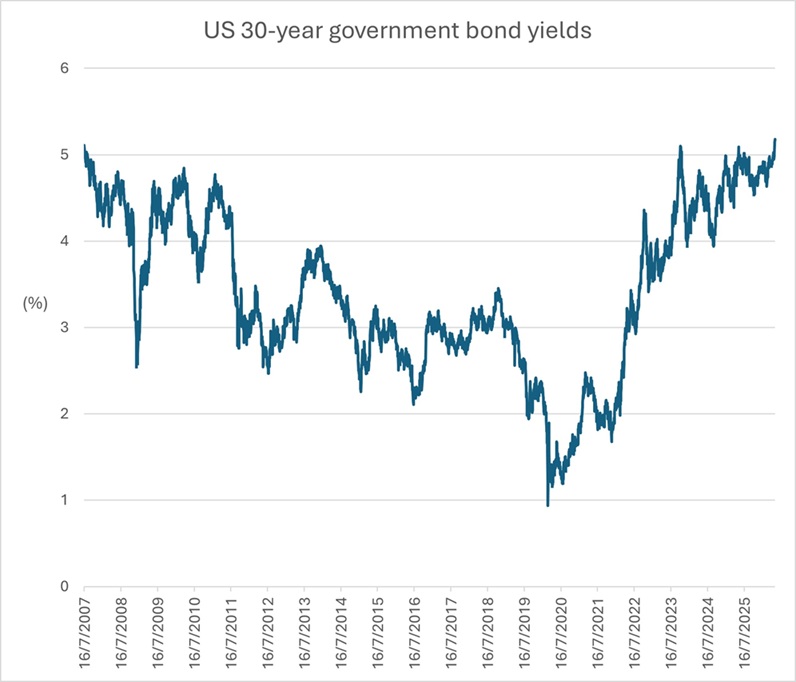
Source: LSEG Datastream, CommSec
Meanwhile, Australian 10-year bond yields are nearing 15-year highs.
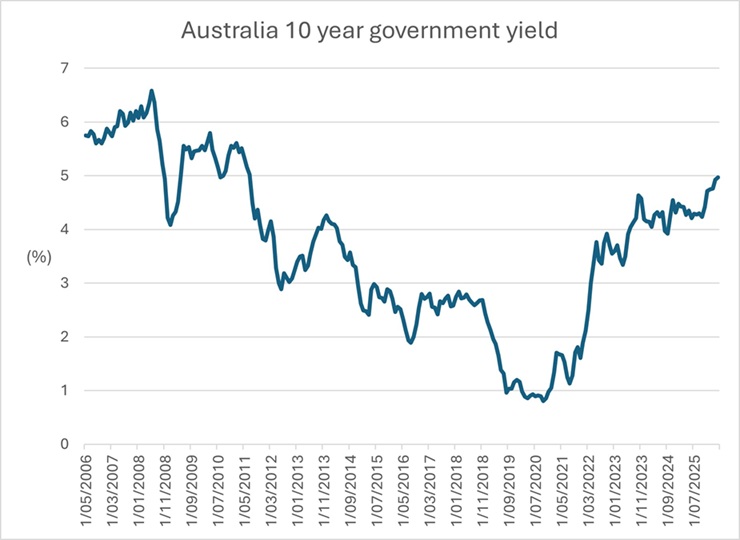
Source: LSEG Datastream, CommSec
Why are bond yields rising?
Bond prices move inversely to bond yields. In other words, when yields rise, bond prices fall.
One of the main drivers of higher bond yields is rising inflation expectations.
The conflict involving Iran has contributed to higher oil prices, adding to existing inflation pressures both domestically and overseas.
By demanding higher yields, the government bond market appears to be signalling expectations that inflation could remain elevated. If that proves correct, central banks may need to keep interest rates higher for longer – or even raise them further – to contain inflation.
In the US, Fed funds futures are increasingly pricing the risk of another rate hike before year-end. That marks a sharp reversal from earlier this year, when markets were expecting two rate cuts.
Recent inflation data has reinforced those concerns. US consumer price inflation for April rose 3.8% over the year, slightly above consensus expectations, while producer price inflation increased 6%, well above forecasts.
Much of the recent increase has been driven by energy prices, though core inflation measures also remain above central bank targets.
In Australia, markets are also pricing in the possibility of another rate increase by September, following three rate hikes already delivered this year.
Why do bond yields matter to the stock market?
Higher interest rates are generally negative for businesses and consumers because they increase borrowing costs and can reduce spending across the economy.
Historically, many economic slowdowns in the US and Australia have been preceded by periods of rising bond yields and higher interest rates.
Higher yields also create challenges for governments, particularly those with large debt burdens such as the US. Interest payments have grown rapidly in the US and rising yields adds further pressure.
These factors help explain why share markets have come under pressure in recent weeks.
Investors will be closely watching upcoming inflation data – including Australia’s release next week – to determine whether the recent rise in bond yields is likely to persist and whether equity markets are adequately pricing in the associated risks.
 Back to

