
What’s really driving energy markets right now?
27 May 26
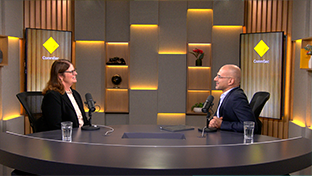
An interview with Argonaut Energy Research Analyst Sarah Kerr on global energy markets, oil, LNG and the implications of supply disruptions.
Global energy markets have experienced volatility before.
But according to Argonaut Energy Research Analyst Sarah Kerr, current conditions differ from a typical commodity cycle.
Rather than a temporary imbalance between supply and demand, Kerr argues markets are dealing with a structural supply disruption following the closure of the Strait of Hormuz and years of underinvestment across the energy sector.
This interview explores how those forces are affecting oil and gas markets, what investors are watching and the potential implications for Australia.
Watch the full interview
Or scroll down for a quick summary
The closure of the Strait of Hormuz has removed a significant volume of oil and LNG supply from global markets
Energy inventories are currently helping to offset supply disruptions
Oil prices may remain elevated even if trade routes reopen
LNG remains a critical energy source for power generation and grid stability
Europe and Asia are competing for LNG supply
AI and data centres are emerging as significant sources of energy demand
Australia remains exposed to global energy and supply chain disruptions
A different type of energy market disruption
Commodity markets typically move through cycles where supply and demand eventually rebalance.
According to Kerr, the current environment is different because supply has been removed from the system rather than demand falling naturally.
She estimates around 14.4 million barrels of oil per day are currently unavailable, alongside approximately 20% of global LNG supply.
Much of the LNG affected had been directed towards Asia, making the region particularly exposed to disruptions.
While markets have been highly sensitive to geopolitical headlines and policy announcements, Kerr says underlying supply conditions remain a key factor to monitor.
Why inventories matter
One of the main indicators Kerr is watching is inventory levels.
Countries and commercial entities hold oil and gas inventories that can be drawn upon during supply disruptions. These stockpiles have helped cushion the impact of recent outages and have contributed to price volatility being driven largely by headlines rather than physical shortages.
However, as inventories decline, that buffer becomes smaller.
Kerr suggests that once inventories are depleted and markets return to focusing on fundamentals, supply shortages could become more apparent..
The impact of underinvestment
A recurring theme throughout the discussion was the effect of reduced investment across the energy sector over the past decade.
Kerr points to the period following the 2015 oil price downturn, when many producers prioritised balance sheet strength over expanding production.
She also notes that investment capital increasingly shifted towards renewable energy and other initiatives during the years that followed, while some industry forecasts suggested fewer new oil and gas developments would be required in a net-zero scenario.
At the same time, perceptions that OPEC held significant spare production capacity and that new LNG projects would create ample supply, reduced incentives for additional upstream investment.
According to Kerr, these factors have contributed to a prolonged period of underinvestment that is now coinciding with major supply disruptions.
Why supply may take time to recover
Even if shipping routes reopen and hostilities ease, Kerr says production may not immediately return to previous levels.
She notes that energy ministers from several Gulf nations have indicated it could take months or years for production to fully recover.
Shipping also presents challenges. Trade flows require sustained stability before vessels and supply chains can be redirected with confidence.
Infrastructure damage, contractor availability and the condition of mature oil fields may further influence how quickly production can resume.
LNG's role in the global energy system
Liquefied natural gas remains an important part of the global energy mix, particularly for countries with limited domestic energy resources.
Major importers such as Japan, South Korea and China rely on LNG to support both households and industry.
Kerr says LNG is increasingly used for power generation and plays an important role in supporting electricity grids because it can be brought online quickly when needed.
Demand for LNG continues to grow across many emerging Asian economies, while Europe is also seeking alternative supply sources as it reduces reliance on Russian gas.
Kerr noted that Australia, the United States and Qatar are major LNG producers in a market facing growing demand.
Europe and Asia competing for supply
Kerr highlighted the growing interaction between European and Asian gas markets.
Because LNG cargoes can be redirected depending on pricing, Europe and Asia can effectively compete for available supply.
At present, the Asian LNG benchmark (JKM) is trading at a premium to Europe's TTF gas benchmark, encouraging discretionary cargoes to move towards Asia.
For investors, Kerr says two indicators are particularly important:
European gas storage levels ahead of winter
The pricing relationship between the JKM and TTF benchmarks
These measures provide insight into regional supply pressures and competition for LNG cargoes.
AI and data centres add a new source of demand
The rapid growth of AI and data centres is creating an additional layer of energy demand.
Kerr points to the United States, where large LNG export facilities were planned years before the recent surge in AI-related infrastructure.
Today, some data centres are securing energy supply directly, reflecting their significant power requirements.
She notes that large facilities often require dedicated sources of electricity and that future developments could influence demand for gas, power generation and other energy infrastructure.
Kerr believes similar dynamics may emerge in Australia as data centre capacity expands.
What it means for Australia
Although Australia is a major energy exporter, Kerr says the country remains exposed to global energy markets.
Kerr notes that Australia imports most of its refined fuel products and maintains relatively limited domestic refining capacity, and that the country is also reliant on imported inputs such as fertiliser, with a significant proportion sourced from the Middle East.
According to Kerr, disruptions to energy markets, shipping routes and chemical feedstocks could eventually affect sectors beyond energy, including agriculture.
While Australia may be able to compete for supplies of diesel and jet fuel, Kerr notes that higher costs could contribute to inflation and place pressure on supply chains.
Kerr says some of the broader economic effects may take time to emerge, with impacts potentially continuing to flow through the economy as the situation develops.
[MUSIC PLAYING] GILLIAN BOWEN: Hello and welcome to the CommSec Executive Series. Today I'm joined by Sarah Kerr, energy research analyst at Argonaut. She specialises in Australia's energy and resources sector. With a background in geoscience, she analyses commodity markets and the costs and risks behind major projects to understand what drives value in the sector. Sarah, welcome to our series today.
SARAH KERR: Pleasure to be here.
GILLIAN BOWEN: So you've recently published a detailed outlook on global energy markets and highlighting what you've described as a structural shift in supply and demand and pricing and what that could mean for investors. We're going to unpack that a bit today. Thinking of the current environment, what is it that you see going on here?
SARAH KERR: So usually when you have a boom or a bust in a particular commodity, you have too much demand. Or there were too much supply and not enough demand, and then prices will drop. That will decrease supply. And then if demand increases, we'll get that price signal for supply to meet that demand again. So that creates that boom and bust cycle that we see usually in oil and gas.
But with the Strait of Hormuz being closed, we're actually facing now a completely structural outage. And we haven't had demand decrease. It's been forced to decrease because of the lack of supply.
So this is globally unprecedented in our modern history-- this level of supply for energy that's been taken away. So we're looking at around 14.4 million barrels of oil per day. So it's around 15% of what the world uses every day. And that's now currently out of the system, including our 20% of the world's LNG, and 90% of that was directed towards Asia.
So unlike Russia and Ukraine where that was predominantly impacting Europe, this is impacting Asia for the most part. And then obviously Australia is impacted indirectly as well because those are our major trading partners.
GILLIAN BOWEN: So how do you then try to work out what's going on or what's ahead when you're looking at such a structural change?
SARAH KERR: So we really have a look at the prices and the price movements. We're seeing now that prices are being traded more on headlines and US policy changes than structural fundamentals. We're also looking at the inventory draws. So our countries and commercial entities have a storage of oil or gas, and those are increasingly being drawn down.
So as we look at those inventory levels dropping, that's really the cushion that has suppressed oil prices to date, on top of a lot of volatile trading that's been caused by Trump's Truth Social announcements. And that's really impacting our prices. But those two things are what we're currently looking at the moment.
GILLIAN BOWEN: Yeah, that cushion effect, you're right because it is about reactionary headlines. One day is different to the other. I mean, you can see the line and the spike one day. We're talking about a 7% plunge. The next day, we're up again 4%. So how do you then work out the play in regards to the genuine supply and what that looks like?
SARAH KERR: So when we actually look at our supply like, we're forecasting oil higher for longer. So once the Strait is reopened, the US can't possibly stay there forever. It will happen. We're anticipating a fall in the oil price when that news is announced.
But then structurally looking long-term, production is not going to come back online as quickly as everyone thinks. We've already had a lot of energy ministers from a lot of the Gulf nations expressed that it's going to take months, if not years, to return supply to where it was, if there is a complete cessation of hostilities. And we don't know if that will occur, even if there is a peace deal.
Another massive constraint is also shipping. It can take 30 days to get a container from one end of the world to the other. And so you need to have ceasefires last longer than a week to actually have ships redirect and then come through. So having a few boats trickling in and out of the Strait of Hormuz is no an indication that anything is being set right.
We really need to see trade flows and when you see that resumption of production. And so that's what we need to see to move forward. But that's in the near-term. The longer term issue is that after the 2015 crash in the oil price, we really saw capital discipline across all the upstream providers. So instead of putting capital back into upstream developments, it was really just about balance sheet protection.
We then entered 2020 to 2022. We had the Biden administration, the Inflation Reduction Act. That encouraged a lot of ESG-focused investments. And we saw oil and gas companies switching to hydrogen, switching to renewables, again, not switching to base oil and gas developments.
And we also had the IEA, the International Energy Agency, say in a net zero scenario, we don't need any more new oil and gas. So that really caused oil and gas companies to pull back on new CapEx spend to increase our production.
Then fast forward into the Trump administration. We had this whole overlay that there was this supply surplus and capacity surplus that OPEC had. So OPEC is really just the cartel centred around Saudi Arabia that essentially dictates the oil price because they had the most amount of barrels they could quickly bring to market. So they could bring the oil price down, or they could remove barrels, and that would bring the oil price up. So really whatever the oil price was whatever OPEC decided to make it.
And because of that illusion that they had so much spare capacity and that also there was a lot of LNG facilities being built, especially in the US, we even had a few additions in Australia as well, that surplus narrative are also pulled back on a lot of upstream spending from oil and gas companies.
So essentially we've had underinvestment since 2015. And then we also have this enormous outage in the Gulf. And so that's really just going to be building towards that supply shortage that we're forecasting for the long-term.
GILLIAN BOWEN: Well, yeah, you've suggested that oil prices could move significantly higher in this environment. What else would need to happen here for that kind of scenario to play out?
SARAH KERR: I think once we actually have the inventories depleted and then we've had the Strait reopen, so we're no longer trading on volatile geopolitical headlines anymore. We're then coming back to fundamentals. And fundamentally, we're going to be missing an enormous section of oil and gas supply in the world. And that is going to translate into higher prices.
But that inventory is really cushioning the effects of this outage at the moment. That also just increases risk in the future, if you have follow-ups in outages or any trade issues because countries don't have that buffer anymore to help, just plug that gap. So once those inventories are gone, I think in that scenario, we would see a rewriting of our oil prices.
GILLIAN BOWEN: Do you think there's enough understanding on how long it takes to build up inventory, the process of shutting it down and then boosting it back up again?
SARAH KERR: So if inventory builds, that's usually up to commercial entities. So they'll buy oil at a lower price and save it for later. In Australia, we have a very poor cover. A lot of our inventory is actually held in the US. So again, shipping constraints can be an issue.
But just as far as how quickly we could bring on additional supply, we've actually seen drill rig rates fall. So that's kind of a proxy of how much our spending is going on. And we're actually in this high price environment seeing the US pull back on drilling new wells.
And in the Middle East, we've seen some real damage to infrastructure. But then also at a geological level, it's a lot of those fields, once they've been shut in, they're quite mature fields. When they lose that pressure, it may never come back. So we won't know the end damage bill until it's all over.
We had Rystad Energy estimate in the region of 50 billion already of damage caused in the Gulf states. And so that's going to require quite a lot of contractors and investment to bring that production even back to where it was. And that's again, coming to our faces for higher oil prices for longer just because those barrels can't get back to market for potentially years.
GILLIAN BOWEN: You've talked about it already, but this idea of underinvestment in the energy sector over the past decade, how has that changed the way these markets are behaving these days?
SARAH KERR: I mean, whenever we see higher prices-- and we saw that in Russia, Ukraine, we're seeing that now-- oil and gas companies are going to return to shareholders. So doing buybacks, special dividends, and putting that capital directly back to their investors instead of reinvesting that into further supply.
There's still, I think, a very strong sentiment that the oil and gas industry is a sunset industry. And so that investment horizon for shareholders is shorter than, say, a toll road or a longer life piece of infrastructure. But as we've seen, demand just keeps growing year on year, really driven by emerging markets.
So yeah, we're not going to see, I think, a return to going back for the supermajors or a lot of majors investing in more upstream supply. They already seem to be returning capital back to shareholders in this next price cycle as well.
GILLIAN BOWEN: Look, let's turn to gas because that seems to be where a lot of the pressure is also building. Can you explain the importance, the strategic importance of LNG and how it fits into the global energy system?
SARAH KERR: So a lot of countries that are energy-poor, so this includes our major LNG trading partners, Japan, Korea, and even China, they import gas instead of having a field of their own because they just don't have the resources domestically.
So the gas that is imported is used obviously from a retail domestic perspective. But increasingly, it's used for baseload power generation, especially in Singapore, for instance. So that is really the backbone of a lot of utilities and grids. That energy can be brought on quickly.
And as we build in more renewables, yes, we're having our more batteries used, but ultimately gas is very energy dense and very quick to bring on. And so that's really helping us stabilise a lot of our grids internationally.
And we're seeing that demand grow year on year in emerging markets, especially in Asia. And then in 2027, Europe wants to stop using Russian gas. So that again, puts more strain on the LNG producers, Australia being the third largest, US first, and Qatar second, which is currently out of the market. So that's really just the importance of LNG is for utilities and grids.
GILLIAN BOWEN: So then with Europe and Asia both competing for supply, what are the risks here when it comes to the gas market?
SARAH KERR: Well, it's interesting because the Middle East is equidistant to Europe and Asia, so they can quite easily get put into a bidding war. And then that will direct discretionary LNG cargoes one way or the other. So you can almost get the European gas index TTF linked to the Asian LNG index JKM. And those are two important indexes to have a look at.
At the moment, JKM is trading higher than TTF. So discretionary cargoes are going towards Asia, and that's because Qatar is essentially out of the whole system, and that accounts for some countries, 100% of their gas imports. So it's quite dire. Even Singapore is incredibly exposed as well.
So for Australia, we're geographically very close to Asia. So it's all about a tyranny of shipping distances. So for us that's our main key supplier. And for Europe, they are increasingly getting LNG from the US. And we're seeing a large LNG infrastructure build out in the US to support European demand.
GILLIAN BOWEN: So for investors trying to follow this, there's a lot going on there. Are there some key signals in the gas markets that matter the most?
SARAH KERR: So two things-- there's the storage levels in Europe. So currently, Europe is sitting in about 30% of their five-year average. They need to get to 90% storage levels ahead of winter. So looking at those storage levels and how far they need to bridge that gap ahead of winter is really important. And that will be an important price signal for Europe.
And then for Asia, obviously, just following the JKM index to see how much of a premium that's being paid on top of TTF. So we haven't seen obviously elevated prices in Europe, but not the level where they're competing with Asia yet. But they do need to bridge that gap because winter is coming.
And we just had an extremely cold winter in the Northern Hemisphere over the last Christmas period. And then we saw domestic US gas prices increase to meet European demand. So we could see another spike when it comes to winter. But that build out for storage levels will actually occur ahead of it.
GILLIAN BOWEN: Look, a couple of questions before we wrap up, but we can't ignore the role of AI. How are data centres and AI starting to influence energy demand globally?
SARAH KERR: Well, this is a fantastic case in the US. And I think this is also very true in Australia as well. But we're seeing this on steroids in the US. We're having an enormous amount of LNG facilities being built there to again service the gas demands of Europe.
When these decisions were made 10 years ago, five years ago, AI wasn't a thing. Data centre growth wasn't a thing. Gas was almost essentially free because it's a byproduct of fracking for shale oil. So a lot of the gas is just being flared.
So they're like, well, what can we do with all this gas, is too much to meet the demands of the US population and industries? There's just surplus gas literally being burnt into atmosphere. And so we'll build LNG facilities. And they've just literally gone from being a marginal supplier to being the number one in the world in just a short period of time, with more LNG facilities to be built out.
And now we've had the rise of AI, and we even have gas being contracted directly by data centres. So the market's getting incredibly tight there. And I think we're going to see this tug of war being pulled between LNG demand and then data centre demand for their utilities.
Because big data centres can't be on the grid-- They use too much power, they need to have their own power generation. They're interested in even building their own nuclear facilities. It's getting to such that level for power requirements and demand.
And we're also going to probably see that on the east coast of Australia, particularly. We're going to see that pool from data centres directly, potentially contracting gas with gas-fired peakers and baseload generation, as well as the LNG demand as well. And we could even see data centres being placed where there is more energy for them to use for the utilities.
GILLIAN BOWEN: It's also interesting how it's all connected, and we do use a lot of data in our everyday life. Look, if we bring it back to home before we wrap up, Australia's a major energy exporter, but we're also quite exposed to global markets, as we've been talking about. How should investors think about this balance?
SARAH KERR: It's extraordinary how much we've let ourselves be let exposed to global markets. We have our own oil supply, yet we only have two refineries left. And we import about 90% of our refined product. And our two remaining refineries of the feedstock of crude that they need to refine, only 15% of that comes from the domestic market.
So we really are just completely exposed to the international market, essentially, predominantly Asia. This is really critical because the crude feedstock, sometimes 90% to 100% came from Middle East for Asia. So essentially, they have no crude feedstock coming in to refine. And then we're seeing more and more a ban on exports of refined products to the rest of Asia, but also to Australia.
So as this crisis is prolonged, that does put Australia at potential risk as well. But we think that Australia will be able to afford whatever it costs for diesel and jet fuel. Obviously, it will add to inflation within the country, but it may be at the expense of Central and Southeast Asian countries that can't bid for refined product like Australia can, which is also not good.
The other issues with the Strait of Hormuz being closed is we're cut off from a lot of chemical feedstock as well, particularly fertiliser, where we import around 60% of our fertiliser directly from the Middle East.
So we're seeing fertiliser prices increase dramatically on the back of that and how that fits in with increased diesel costs, with increased fertiliser costs, we could see our agricultural industry not grow any crops for a season because all those individual financial decisions will be made by farmers and the agricultural sector, which could lead to global food shortages and food shortages within Australia, which we won't see for another 12 to 24 months.
So there is an enormous amount of impact to Australia that we haven't felt yet from this crisis that will keep rippling through the economy as we move through this crisis.
GILLIAN BOWEN: That was a big question to finish on. There's plenty in that answer I'd like to unpack. Maybe we need to come back and talk about food prices and the flow on impact there. From what you were saying, that's really interesting-- some things to ponder there. Sarah Kerr from Argonaut, thank you for your insights today.
SARAH KERR: Thank you.
GILLIAN BOWEN: And thank you for watching. You can find more CommSec Executive Series interviews on our website or our YouTube channel, CommSecTV.
[AUDIO LOGO]